
CNN Indonesia: Private and Islamic School Teachers Demand Fair Wages in Indonesia
The Protest: A Call for Equality
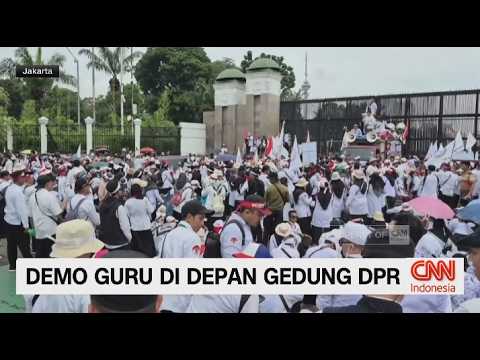
On a significant day for education in Indonesia, thousands of private and madrasah teachers gathered outside the parliament building in Central Jakarta. This demonstration, which attracted a diverse group of educators, was aimed at drawing attention to the pressing issue of wage disparities between private and public school teachers. Protesters carried banners and chanted slogans demanding equal pay and improved welfare, emphasizing their crucial role in the nation's education system.
Madrasah teachers, who work in Islamic schools, play an essential role in the educational landscape of Indonesia. These institutions not only teach standard subjects such as mathematics and science but also provide religious education, including lessons on the Quran and Arabic. Despite their significant contributions, many of these educators report receiving lower salaries and fewer benefits compared to their public school counterparts.
The Economic Context of Teacher Salaries
The issue of teacher salaries in Indonesia is a reflection of broader economic challenges faced by the country. According to the Ministry of Education and Culture, public school teachers earn an average monthly salary of approximately IDR 5 million (around $350), while private and madrasah teachers often earn significantly less, with some reporting salaries as low as IDR 2 million (about $140). This stark contrast raises questions about the value placed on educators in different sectors of the education system.
The disparity in pay is further exacerbated by the lack of health benefits and job security for private and Islamic school teachers. Many of these educators work under precarious conditions, often without contracts or formal employment agreements. The protesters are urging lawmakers to implement policies that ensure fair wages, health benefits, and equal treatment for all teachers, regardless of the type of institution they work for.
Government Response and Future Implications
In response to the protests, government officials have acknowledged the concerns raised by the teachers but have yet to provide a concrete plan for addressing the wage disparities. Education Minister Nadiem Makarim has stated that the government is committed to improving the welfare of all teachers, but specific measures to ensure equitable pay remain unclear. This lack of clarity has led to frustration among educators who feel their voices are not being heard.
The outcome of this protest could have significant implications for the future of education in Indonesia. If the government responds positively to the demands of the teachers, it could lead to a more equitable education system where all educators are valued and compensated fairly. Conversely, failure to address these issues may result in continued unrest among educators and could hinder efforts to improve the quality of education in the country.
Sources: Ribuan Guru Swasta dan Madrasah Demo di DPR RI; CNN Indonesia